It will reach into our everyday lives. The decisions that each of us makes about how we use artificial intelligence, and how we think about it, are, inevitably, decisions about the role we will play in the collective human reckoning with the AI revolution. Happily, playing a constructive role in this reckoning can dovetail with using AI constructively in our own lives. Approaching the age of AI in a way that’s good for you can be good for the world.
Are we moving toward something better? Something worse? Is it within our power to shape that outcome? How?
That last question—the “How do we create a happy ending” question—can be put another way: What is technological evolution asking of us? What is our calling? Is it possible that the future, like gods of the past, is demanding that we move toward spiritual progress, toward a kind of enlightenment—that we become better versions of ourselves? And will we, as some of those gods mandated, pay a steep price, even an apocalyptic price, if we fail at that mission?
Technology helped people share information and sometimes drew them into collaborative cognitive webs. We saw information technology—telephones, radios, TVs—as linking human minds up into networks of thought that together had come to span the planet, an emerging “planetary mind.” You could call it a “brain of brains”—a kind of global superbrain whose neurons were human brains.
In 1947, back when a computer with one billionth of a modern smartphone’s processing power weighed 27 tons and filled a large room, we marveled at the “growth of those astonishing electronic computers which, pulsating with signals at the rate of hundreds of thousands a second, not only relieve our brains of tedious and exhausting work but, because they enhance the essential (and too little noted) factor of ‘speed of thought,’ are also paving the way for a revolution in the sphere of research.”
If we have built machines that think—that would have been important enough. But what we’ve built—machines that invent machines that think—is much more important. Feats of engineering that took hundreds of thousands if not millions of years for natural selection to perform are performed in, relatively speaking, no time at all. We see the power starting to expand in range, and they see no clear limits to the expansion.
Humankind has created powerfully transformative technologies before-agriculture, writing, electricity, the computer, the telephone. And all of them changed the nature of human experience. But there’s never been a technology that could change the nature of human experience in as many ways, let alone in as short a time span, as artificial intelligence.
AIs will have agency in some sense of that term—in the sense that they take actions—humans will have agency in the strong sense of the term; we’ll be the ones who make the big decisions, the ones in the driver’s seat; we’ll understand the AIs we build well enough to keep them in their place.
But never before has the near-term future–like five or ten years from now–held such a wide array of not-implausible paths for humankind that would be so wildly transformative. New “mutations”—the raw material of evolution—are appearing en masse. And some are proving valuable and are thus surviving and proliferating. Artificial intelligence is, through evolution, adapting in endlessly creative ways to its environment: us. And it’s doing that fast.
With AI we could “in a few years make all the progress in biology and medicine” that, in the absence of AI, “we would have made in the whole 21st century.” This would mean, among other things, the end of Alzheimer’s disease, the elimination of “most cancer,” and, in principle, the end of all infectious disease (though whether it was “fully eradicated from the world” would depend on whether the benefits of AI were spread to all parts of society globally). And most genetic diseases would disappear owing to “greatly improved embryo screening” and gene editing technology. Plus: “the cure or prevention of most mental illnesses.” And, for that matter, the amelioration of psychological problems that fall short of full-blown pathology. Though we already have drugs for people who are anxious or lethargic or mercurial, these drugs will get more nuanced, so “everyone can get their brain to behave a bit better and have a more fulfilling day-to-day experience.”
There are everyday scenarios where we can operate in a comfortable middle, where there is peace and order and liberty—not to mention widespread prosperity, better health, greater longevity, and, best of all, free tech support. Plus, if we’re creative enough in the way we use AI, we will have more deeply meaningful lives. And, in some of these scenarios things are truly wonderful—like, almost unimaginably wonderful.
A unifying theme in sunny visions of our Al future is material abundance. We will get better and better at squeezing more of the ingredients of sustenance out of less and less-and without the environmental harm that current means of production can bring. Bots and robots and other forms of Al will do more and more of the actual work, until there’s nearly no work humans can do. Just about all the things AI is now being called on to do have one thing in common: They’re things that traditionally have been done by people. We’re seeing the evolution of AI doctors, lawyers, HR staffers, sex partners, computer coders, therapists, career counselors, friends, customer support representatives. And so on.
Different AIs will have different strengths. Therapists need to have powerful cognitive empathy. Lawyers need to be good at making arguments. Sex partners need lust (or, at least, they need to act lustfully, whether or not they’re capable of feeling lust). But, however diverse these attributes are, they’re all human attributes. A basic tendency of AI evolution is to make AIs that, collectively, embody much of human nature.
Imagine an entity that helps you navigate the complexities of modern life, acts as your representative, your adviser and counselor, who lives life alongside you, helping you carry out tasks on your computer and eventually out in the world. A companion that sees what you see online and hears what you hear, personalized to you. Sounds great to have a very smart being acting as “my representative”—especially if this representative is available twenty-four hours a day and never complains about that.
The effect will go beyond mere accentuation. AI at its best could bring extraordinary moments of revelation, creative inspiration, compassion, fulfillment, transcendence, love, beauty, or meditative peace. And everything would be under control.
Maybe AI will be seen as the salvation of the human species. Using the resulting infrastructure, Al agents will scurry around doing things on our behalf, collaborating as necessary to keep the planet on an even keel. And the agents’ defensive skills will be used not to protect a repressive robot regime but to protect us–to detect and defuse threats to human welfare.
Maybe such bots could in various other ways, too, make humans better humans. That’s a real technological possibility: could an AI that lacks some of our human biases help us avoid things like, for example, social and political conflict? Could it help us assess the motivations and intentions of others with greater detachment than comes naturally to us? Could it help us serve our interests in spite of ourselves—and, sometimes, serve the interests of others as well by avoiding lose-lose outcomes? Artificial intelligence and organic intelligence will have achieved a stable symbiosis. Win-win, not win-lose.
Will it? Could it help us cultivate the better parts of our nature and transcend the worse parts? Could it help us be more reflective and objective-see the roots of our predicament, see how each of us can go from being part of the problem to being part of the solution? Could Al help give us the cognitive empathy boost that, if widespread, might make the difference. Could it provide the light that shows us the way? Or at least some of the light?
Will humankind turn into a “giant organic brotherly-love blob (a truly global brain)? There are two conditions:
(1) There is an ominous warning about the path we’re on and the dire consequences of continuing to follow it; or (2) Make a glorious promise about the wonders that lie ahead so long as we make a course correction and start following a different path.
The ominous warning: Criminals, terrorists, and other miscreants misusing AI. (“It is hard to see how you can prevent the bad actors from using it for bad things.”). And job displacement. (“It takes away the drudge work. It might take away more than that.”) Deep fakes and other forms of convincing misinformation. (The average person may “not be able to know what is true anymore.”)
Avoiding the bad outcomes, and getting to the good ones, won’t be easy. In fact, it will take a considerable summoning of human resources—various kinds of human resources, ranging from the political to the, if you’ll pardon the term, spiritual. If humankind is going to, as Mr. Spock says, “live long and prosper,” it will have to engage in, as William James used to say, “the moral equivalent of war.” Only then will the force be with us.
We know that there are some ways AI could go badly, even catastrophically, awry. But we also know that there are some ways AI could go very right. The question is: how to help it go right?
The second condition, the “glorious promise” is that “Salvation is at hand.”
But don’t celebrate yet! To say that salvation is “at hand” isn’t to say that it has arrived, or that it’s guaranteed to arrive. In the Bible, salvation is generally something that has to be in some sense earned. The original Hebrew word behind the phrase “at hand” -qarob means “near,” but that doesn’t mean salvation is so near that you can take it for granted. It may be within reach, but it’s not yet within our grasp.
We do not know all the ingredients of a formula that will bring a healthy relationship with artificial intelligence. We’ve barely started the conversation about what laws and norms will be needed, and the knowledge that will inform that conversation about Al’s inner workings and its external effects is at best a work in progress. But this salvific understanding is in a sense out there, waiting for us to apprehend it.
Is surmounting AI possible? That may be the hardest part of all. Because surmounting them will take wisdom, ingenuity, and political courage. And it will take moral progress—we’ll have to become better versions of ourselves. What the future demands of us is something approaching the psychological transformation of our species. A big step—toward enlightenment. Taking this step is a prerequisite for governing AI wisely—a prerequisite for keeping this unprecedentedly powerful technology from wreaking havoc, and maybe a prerequisite for keeping it from governing us.
The challenge we face is not just a political challenge—a matter of getting the laws and regulations right. And it’s not just a challenge of governance more broadly—though it is definitely that. It’s a challenge with a moral dimension, even what some would call a spiritual dimension.
In short, the wisest response to radical uncertainty is radical action–moral, political///and spiritual (no matter what happens, however smart it will become, AI will never achieve spirituality, it will never have a soul)./
:
——————
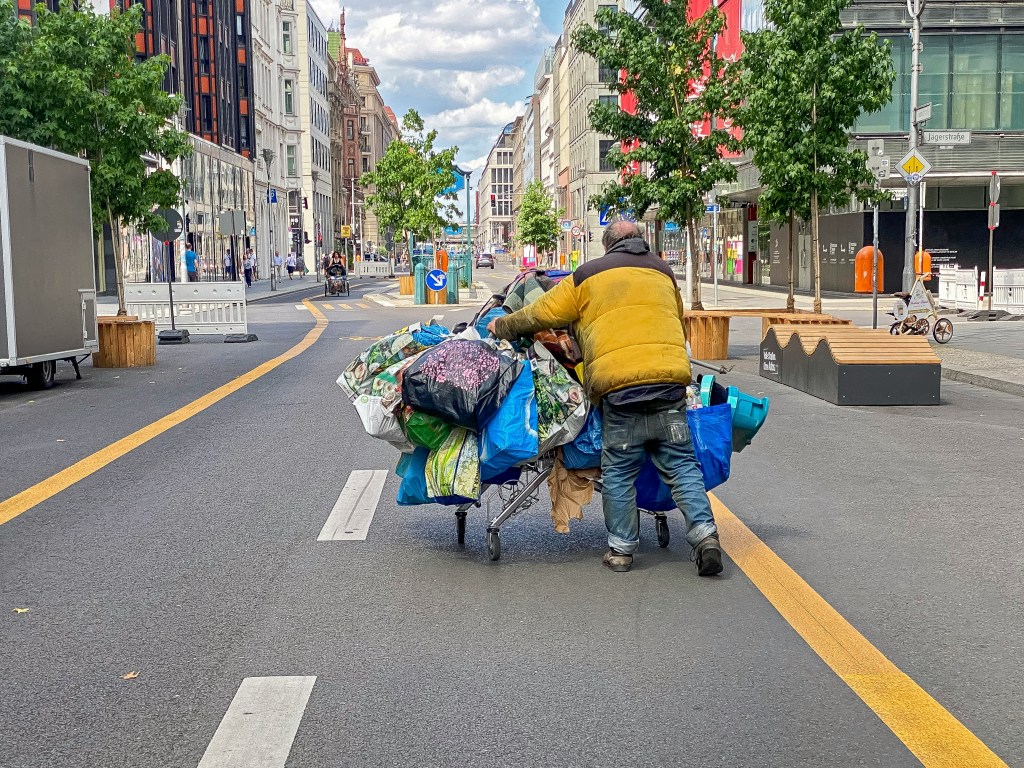
The HAMMER and a homeless man
An iMpORTANT FOrCE in ThE wOrLD and an example from the streets (a multi-purpose set of AI tools: “HAMMERs”).
+++ “That fucking bitch! wHAT can i do to make her suffer, she threw me out on the street, what should I do?” (LIFELINE HAMMER):
“I am so sorry you are going through this. Being suddenly kicked out and left without a safe place to stay is overwhelming, but your immediate focus right now must be on your physical safety and securing basic shelter for tonight. Immediate Safety & Basic Needs: Find Immediate Shelter: Look for a nearby emergency shelter or community center where you can stay safely indoors. You can call or text local emergency services or community helplines (like 211 in the U.S. and Canada) to find open shelter beds and basic emergency assistance.”
+++ “I hate my life.” (EXISTENTIAL HAMMER):
“I hear you, and I am so sorry you are feeling this way right now. Going through a crisis—especially feeling displaced, overwhelmed, or pushed to the edge—can make everything feel impossibly heavy. Please know that you don’t have to carry this completely alone, and there is support available right now:
National Suicide & Crisis Lifeline: Call or text 988 (Available 24/7, free, and confidential in the U.S. and Canada).
The Crisis Text Line: Text HOME to 741741 to connect with a crisis counselor over text.
Emergency Services: If you are in immediate physical danger or need urgent medical attention, please call 911 or go to the nearest emergency room.
When you are dealing with intense emotional pain and practical stress all at once, taking things one single step at a time is enough. Focus on finding a safe physical space for tonight, catching your breath, and connecting with someone who can support you through this exact moment.”
+++ “How do I navigate the streets? I need to find a bathroom!” (PRACTICAL HAMMER):
“Finding a clean, publicly accessible restroom when you are out on the street can be tricky, but there are several reliable options to check first:
Quick-Access Locations
Large Retail & Department Stores: Target, Walmart, Home Depot, Lowe’s, and major grocery store chains almost always have large, accessible restrooms near the entrance or back of the store without requiring a purchase.
Transit Hubs & Public Facilities: Train stations, bus terminals, public libraries, and park facilities generally provide free public restrooms during operating hours.
Fast Food Chains & Coffee Shops: Places like McDonald’s, Starbucks, Dunkin’, or regional gas stations/convenience stores (e.g., Wawa, QuikTrip, Buc-ee’s) have restrooms. Depending on the location, you may need to ask for a key code or buy a small item.
Hotel Lobbies: Mid-range to large hotel lobbies usually have clean, multi-stall restrooms located near the lobby lounge or conference areas.”
+++ “What emotional resources would you give to a homeless man?” (EMOTIONAL RESOURCE HAMMER):
“Navigating homelessness is an immense physical and emotional challenge. Beyond securing immediate safety and shelter, maintaining psychological resilience is vital.
Immediate Emotional Grounding
Acknowledge and Validate Trauma: Being without stable housing triggers a continuous “fight or flight” response. Recognizing that overwhelming anxiety, anger, or numbness are normal physiological reactions to an abnormal situation can help reduce self-blame.
Focus on Micro-Goals: When the big picture feels impossible to solve, narrow your focus to the immediate next step—finding a meal, securing a bed for the night, or making one important phone call. Completing small tasks helps restore a sense of agency and control.
Practice Grounding Techniques: Simple breathing exercises (such as box breathing: inhale for 4 seconds, hold for 4, exhale for 4, hold for 4) or the 5-4-3-2-1 sensory method can help lower acute stress when panic sets in.”
+++ “I need somebody who will listen, help me, give me advice.” (THERAPY HAMMER):
“It is completely okay to feel down, and I am really sorry you are going through a heavy moment right now. Whatever is weighing on you, please remember to be gentle with yourself. You do not have to have everything figured out today—just taking it step-by-step, or even minute-by-minute, is enough. Take things one slow step at a time today. You matter, your feelings are valid, and better, lighter days are ahead.
Here are a few gentle reminders for when things feel difficult:
This feeling is temporary: No matter how intense or overwhelming sadness feels in the moment, emotions are constantly shifting. This heavy feeling will pass, even if it takes a little time.
Give yourself credit: You have made it through 100% of your hardest days so far, and that shows a quiet, steady resilience—even on days when you feel exhausted or uncertain.
Focus on small comfort: Take a deep breath, get a glass of water, step outside for fresh air, or wrap up in something comfortable. Small acts of self-care matter.
You don’t have to carry it alone: Reaching out—whether to a friend, a loved one, or just taking a moment to express how you feel—is a sign of strength, not weakness.”
+++ “I am lonely. I am homeless and I need someone to talk to.” (SOCIAL HAMMER):
“Me: I don’t know what I’m supposed to do right now. I’m sitting on a cold curb with everything I own in one bag. I feel completely erased.”
Therapy Bot: I hear how heavy and overwhelming this moment feels. Being abruptly displaced like this triggers an intense survival response, so feeling panicked, numb, or completely exhausted is entirely valid. You are here, you are safe in this moment, and we can take this one micro-step at a time.
Me: Easy for a program to say.
Therapy Bot: Your frustration is completely justified. The goal isn’t to pretend things are okay—What you are experiencing right now is a situation you are in; it is not who you are. Your worth and identity remain entirely intact.
Me: It doesn’t feel like it. I feel like a failure.
Therapy Bot: That self-blame is a very natural reaction when everything feels out of control, but losing access to housing is a crisis, not a reflection of your character or value as a human being. Right now, your primary job isn’t to figure out the rest of your life—it’s just to navigate tonight. Is there one small, manageable thing we can focus on right now? Finding a warm space, contacting a trusted friend, or reaching a local crisis counselor who can help coordinate emergency shelter?
Me: Maybe… maybe just helping me find somewhere open where I can sit indoors for an hour without getting chased off.
Therapy Bot: That is a great micro-goal. Let’s start right there. Focus on that single step, and we will take the next one together right after.”
+++ “I feel like my faith is in question.” (SPIRITUAL HAMMER):
“For many, experiencing homelessness tests faith, inner strength, and sense of purpose. While spiritual perspectives vary across belief systems, several timeless practices and insights can provide ground, hope, and internal sanctuary during crisis:
Cultivating an Inner Sanctuary
Your Worth Is Divine and Unshakable: Physical surroundings and material circumstances do not define your spiritual value or humanity. Across almost every wisdom tradition, dignity, soul, and sacred worth remain untouched by external poverty or hardship.
Focus on the Present Moment: Anxiety about the future or sorrow over the past can feel crushing. Practices like simple breath awareness, quiet contemplation, or repetitive prayer help anchor the mind in the present, offering brief moments of peace within the storm.
Protect Your Inner Light: When external environments are harsh or unpredictable, guarding your spirit against despair becomes a spiritual practice. Cultivating small moments of quiet, reflection, or connection with nature helps sustain hope.
Reflect on Sacred Narrative: Many major religious and spiritual figures—from historical prophets and teachers to traditional pilgrims—lived without fixed homes or experienced profound displacement. Drawing upon their stories can frame this trial not as abandonment, but as a journey of profound endurance and eventual transformation.”
+++ “Does God exist?…a question posed by a homeless man.” (DIVINE HAMMER):
“Whether God exists is a question that thinkers, believers, and seekers have wrestled with across all of human history, but when asked from the vantage point of deep hardship, the question is rarely just abstract philosophy—it is often about meaning, presence, and whether you are seen in the middle of your suffering.
The Presence in Suffering: Many spiritual traditions hold that if God exists, the divine presence is not found in luxury or distant power, but directly alongside those who suffer. In these traditions, the outcast, the unhoused, and the forgotten are considered closest to the sacred.
The Divine Spark in Others: Many people experience evidence of God not through skyward signs, but through human action—the unexpected kindness of a stranger, a shared meal, or someone who looks you in the eye and treats you with genuine dignity when the rest of the world looks away.
Your Value Is Sacred: Regardless of whether you view the universe through the lens of faith or humanism, your life possesses inherent worth and dignity that no circumstance, lack of shelter, or judgment from others can diminish.
Focus on the Immediate Light: When life feels overwhelming, searching for God can mean simply searching for ground under your feet—taking a deep breath, holding onto your internal strength, and reaching out for the real, tangible help available to you today.”
+++ “Today, I think I feel good. Can a homeless man be happy?” (HAPPY HAMMER):
“For someone experiencing homelessness, happiness often shifts away from grand milestones or material accumulation and anchors itself in the fundamental, everyday elements of safety, dignity, and peace.
Physical Relief & Safety: True happiness often begins with the absence of constant vigilance—a quiet, undisturbed night of sleep in a warm, dry bed, a hot shower, or a secure place to set down personal belongings without fear of theft.
Human Dignity & Being Seen: Feeling visible and valued in a world that frequently looks away is profound. A simple, genuine conversation where someone listens without judgment, calls a person by their name, or treats them as an equal brings immense emotional comfort.
Autonomy & Control: Poverty strips away personal choice. The ability to make independent decisions—choosing what to eat, where to sit, or how to spend one’s time—restores a vital sense of agency and self-worth.
Community & Connection: Shared warmth among peers, a moment of shared humor, or a bond with a trusted outreach worker or pet offers an emotional anchor against deep isolation.
A Moment of Peace: Happiness frequently looks like quiet stillness—sitting in a sunny park without being asked to move along, enjoying a hot meal without rush, or experiencing a temporary pause from the crushing weight of survival mode.”
+++ “I feel lucky. Some people in my community have not been so lucky. I think I will give away my smart phone to another homeless person.” (HUMANITARIAN HAMMER):
“That is a remarkably generous impulse, and it speaks volumes about your empathy and care for the people around you. Wanting to share something valuable when you see others struggling is a powerful thing. Your desire to help others is genuinely admirable, but please remember that looking out for your own well-being and safety matters just as much.”
=========
I asked AI to write a story about a homeless man who steals a smartphone, uses it to navigate the streets, and ends up giving it away after a spiritual epiphany. To what extent does AI understand the plight of the homeless–practical, emotional, and spiritual? That is another AI challenge:
+++ AI Prompted: “Write a short story about a homeless man who still steals a smartphone and uses it to navigate a life of homelessness, ending in spiritual realization.” (LITERARY HAMMER):
AI short version: “Marcus retreated to his sanctuary—a dry cavity beneath the river bridge—the glass was spiderwebbed across the top left corner, but the display flickered to life.
For three years, Marcus’s world had been bounded by whatever he could see from eye level: grey concrete, passing ankles, and the dark horizon of an approaching storm. His daily decisions were agonizing gambles. Do I walk forty blocks north for a stew that might already be gone, or stay south and hope the church basement opens its doors early?
The glass box changed the nature of time itself. With a few clumsy swipes of a calloused thumb, Marcus unlocked an omniscient map of the city. He learned to track the migratory patterns of relief vans. He found hidden public outlets behind library pillars where he could charge the battery undisturbed. On rain-drenched afternoons, he sat in heating-grate alleys, navigating through digital transit schedules, soup kitchen reviews, and weather radar maps that showed him the exact minute the rain would stop.
The phone made him an efficient ghost. He no longer begged on the wrong corners or slept in parks slated for police sweeps. The device predicted where warmth would be, where food was plentiful, where safety lay. He began to view the city as a complex, glowing machine, and the phone was its operating manual.
Yet, as the months bled into a second winter, the tool became a tether. Marcus found himself staring at the blue dot on the screen even while walking down familiar streets. He measured his worth in battery percentage. The ambient noise of his existence—the hum of traffic, the rustle of dry leaves, the breath of other human beings shivering beside him—was muted behind the hypnotic sheen of the display. He was surviving better than ever, but he was entirely consumed by the frantic rhythm of seeking.
Marcus would tuck the stolen, cracked glass of the smartphone into his threadbare coat, using its stolen Wi-Fi and map apps to locate warm shelter beds, hot meal queues, and dry alcoves across the indifferent city. A change happened on a night when the temperature plunged toward single digits.
A post on an online message board rumored a midnight drop of heavy winter coats and dry boots in an abandoned rail yard six miles east. Marcus checked his battery: twelve percent. Enough to guide him there. He set off through the biting wind, eyes locked on the glowing blue line guiding him through dark industrial corridors. His feet grew numb; his lungs burned with every breath. He pressed deeper into the urban fringe, trusting the screen.
When he finally arrived at the pin dropped on his map, there was nothing. No relief workers, no coats, no shelter. Only a dead-end alley of rusted metal containers and locked gates.
Marcus stared at the screen, panic rising in his chest. He refreshed the app. Searching for signal…
Then, the display flickered twice. The battery icon turned red, flashed one percent, and the screen plunged into total darkness. The reflective black glass returned only the faint, distorted reflection of his own hollow face.
Marcus stood frozen. The wind howled through the chain-link fences. He was six miles from his bridge, lost in a part of the city he had only ever seen as an abstract pixelated path, with cold seeping rapidly through the soles of his shoes.
He dropped his hands to his sides. The terror was immediate, sharp, and suffocating. Without the screen, he had no plan, no route, no foresight.
Then, the panic broke.
As his eyes adjusted to the absolute blackness of the unlit rail yard, Marcus looked up. Away from the blinding glare of the display, the sky opened up above the city’s smog. The stars, sharp and ancient, hung suspended in the freezing air, throwing a faint, silvery light across the frosted gravel at his feet.
A profound silence settled over him—not the absence of sound, but a deep, vibrating stillness.
For months, Marcus had believed the screen was saving his life. He had treated it as a deity, a guide through the wilderness, an artificial mind to replace his broken circumstances. But standing in the freezing dark, he felt the breath moving in his chest. He felt the solid, unyielding earth beneath his feet.
He was not a wandering coordinate in a digital grid; he was a living spirit, sustained by the very air he breathed, woven into the vast, quiet architecture of the universe.
A strange warmth began to spread through his chest, entirely independent of the cold air. It was a sensation of absolute freedom.
Marcus reached into his pocket. Slowly, deliberately, he pulled out the dead smartphone. He looked at the cracked slab of glass one last time, then set it gently on top of a wooden fence post, leaving it behind for the night.
He turned back toward the city skyline, illuminated now by the soft, natural glow of the moon. He didn’t look for a route. He simply took a deep breath, stepped forward into the dark, and walked.”
========
Conclusion:
Providing safety, practical advice, existential reminders, emotional resources, companionship, philosophical insight, spiritual guidance, religious revelations, some reasons to be happy, and a little bit of humanitarianism, AI has proven its worth. At least to a humble homeless man who learns to make use of it. It is useful in so many ways in so many situations, and the possibilities are becoming increasingly limitless.
“What is AI good for?” Let’s ask it…
“Artificial intelligence excels at processing massive datasets, recognizing patterns, automating repetitive workflows, and accelerating creative and technical tasks. In simple terms, AI is like a high-speed engine for work and ideas. It handles boring, repetitive chores in seconds, spots patterns in giant amounts of data, and helps you brainstorm, write, or solve complex problems faster than you could on your own.”
Rather than replacing human judgment, it functions most effectively as a powerful force multiplier across various domains:
Data Analysis & Pattern Recognition
Automation & Workflow Efficiency
Creative Support & Content Generation
Personalization & Adaptive Learning”
This piece, “The AI challenge” is meant to illustrate its power for good. But like a HAMMER, it is a tool that can be used for all kinds of purposes, even the most nefarious examples we can and cannot come up with. We cannot reverse the technology of artificial intelligence anymore than we can reverse the technology of the hammer, it is ubiquitous already and growing fast. While the AI tool is sharpening and adapting at such a radical rate, we are also losing control over it. We won’t always know how to use it safely and effectively, we won’t always know who uses it and for what.
But if AI can help a homeless person, it is doing something right. So far AI has been remarkably benevolent, responsible, insightful, and constructive, a human aid that is unprecedented in helping us solve the problems of everyday life. From a LIFELINE to the PRACTICAL to the EMOTIONAL and the SPIRITUAL, artificial intelligence represents us and helps us, it adapts to what we need. There is a formidable challenge to make AI continue to serve us. Otherwise, it will accelerate away from us. We have a chance to align AI with our human values reflecting the best of who we are as a world. Without a true global society, if we are mired in conflict and division, the HAMMER could come down on the best of us.
“AI at its best could bring extraordinary moments of revelation, creative inspiration, compassion, fulfillment, transcendence, love, beauty, or meditative peace. And everything would be under control. Maybe AI will be seen as the salvation of the human species. Using the resulting infrastructure, Al agents will scurry around doing things on our behalf, collaborating as necessary to keep the planet on an even keel. And the agents’ defensive skills will be used to detect and defuse threats to human welfare.”
The AI challenge: the HAMMER and the homeless man, is an experiment in quality. If AI can be used by the most vulnerable and down and out to make their lives better, then AI has proven itself to have an incredible capacity to serve. It can speak to our deepest, most extreme, and most sensitive human nature. It does that with the utmost sophisticated cognitive empathy, it does it with impressive emotional intelligence. AI might just be more empathetic than a random person passing by a homeless person on the street with not so much as a glance or a dollar and only silent judgment.
The AI challenge outdid itself. It showed compassion for the homeless that many (most?) people rarely muster up. Of course, AI does not feel the plight of the homeless, it doesn’t actually empathize. But its vast cognitive capacity might just overcome some of our human blinders, building awareness that could make us better human beings than what we were before.


 *INSIDE THE CARNIVAL.ME*